MACBETH
Macbeth
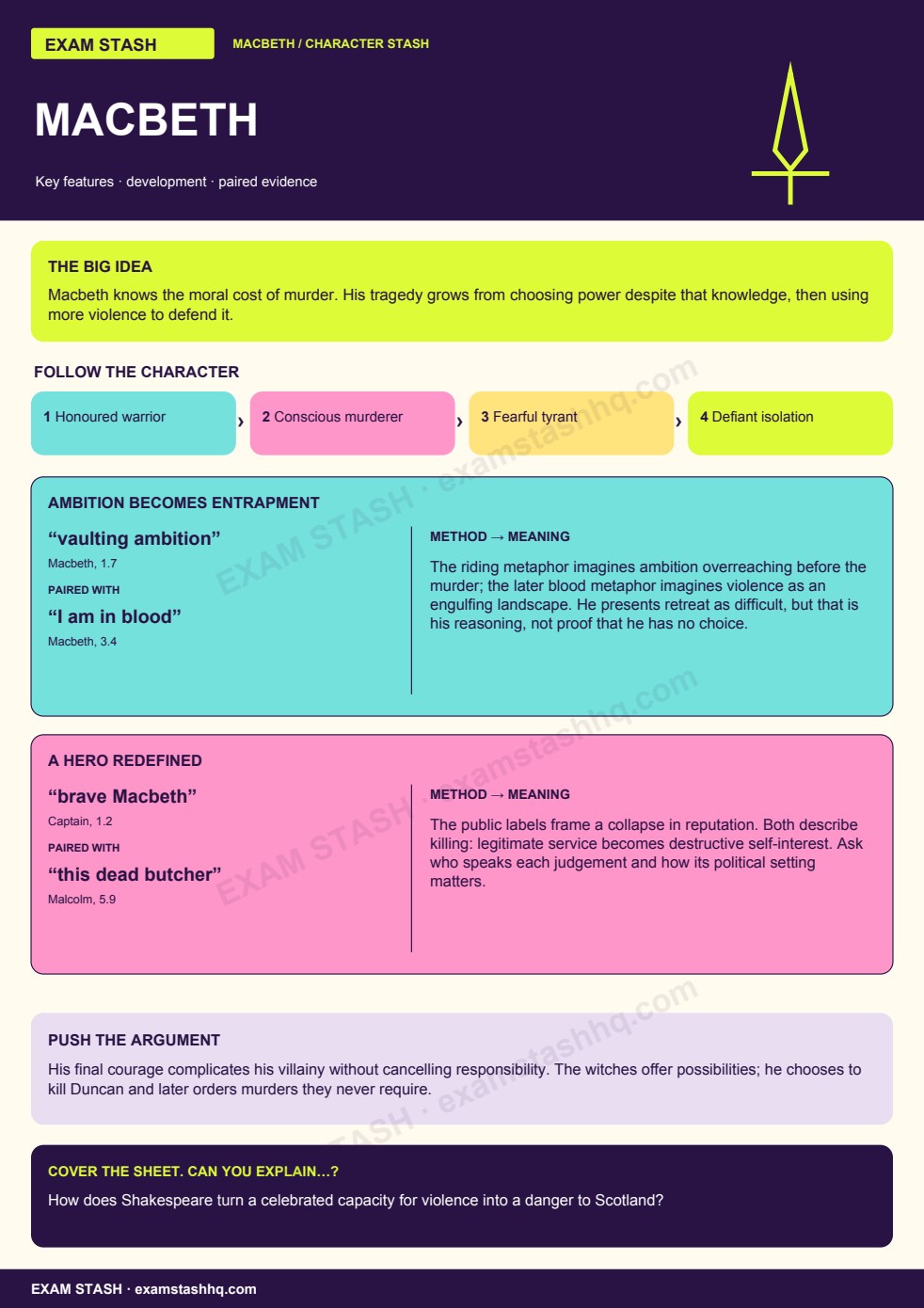
Macbeth knows the moral cost of murder. His tragedy grows from choosing power despite that knowledge, then using more violence to defend it.
Read the accessible text and study notes
Macbeth
Macbeth knows the moral cost of murder. His tragedy grows from choosing power despite that knowledge, then using more violence to defend it.
Honoured warrior → Conscious murderer → Fearful tyrant → Defiant isolation
Ambition becomes entrapment
“vaulting ambition” — Macbeth, 1.7
paired with “I am in blood” — Macbeth, 3.4
The riding metaphor imagines ambition overreaching before the murder; the later blood metaphor imagines violence as an engulfing landscape. He presents retreat as difficult, but that is his reasoning, not proof that he has no choice.
A hero redefined
“brave Macbeth” — Captain, 1.2
paired with “this dead butcher” — Malcolm, 5.9
The public labels frame a collapse in reputation. Both describe killing: legitimate service becomes destructive self-interest. Ask who speaks each judgement and how its political setting matters.
Push the argument
His final courage complicates his villainy without cancelling responsibility. The witches offer possibilities; he chooses to kill Duncan and later orders murders they never require.
Recall
How does Shakespeare turn a celebrated capacity for violence into a danger to Scotland?
Read Macbeth. Scene locations are used because page numbers vary by edition.