A CHRISTMAS CAROL
Fezziwig
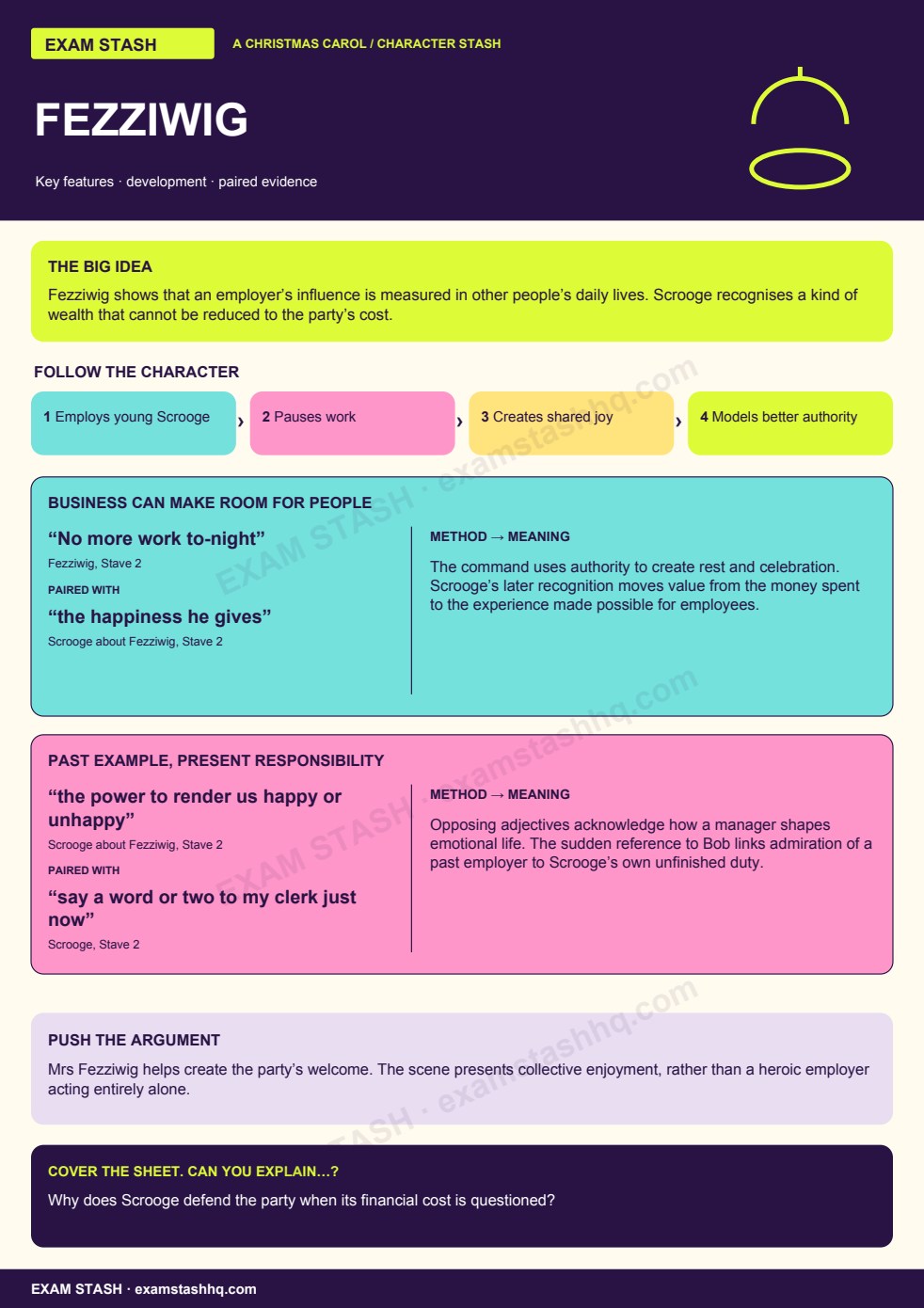
Fezziwig shows that an employer’s influence is measured in other people’s daily lives. Scrooge recognises a kind of wealth that cannot be reduced to the party’s cost.
Read the accessible text and study notes
Fezziwig
Fezziwig shows that an employer’s influence is measured in other people’s daily lives. Scrooge recognises a kind of wealth that cannot be reduced to the party’s cost.
Employs young Scrooge → Pauses work → Creates shared joy → Models better authority
Business can make room for people
“No more work to-night” — Fezziwig, Stave 2
paired with “the happiness he gives” — Scrooge about Fezziwig, Stave 2
The command uses authority to create rest and celebration. Scrooge’s later recognition moves value from the money spent to the experience made possible for employees.
Past example, present responsibility
“the power to render us happy or unhappy” — Scrooge about Fezziwig, Stave 2
paired with “say a word or two to my clerk just now” — Scrooge, Stave 2
Opposing adjectives acknowledge how a manager shapes emotional life. The sudden reference to Bob links admiration of a past employer to Scrooge’s own unfinished duty.
Push the argument
Mrs Fezziwig helps create the party’s welcome. The scene presents collective enjoyment, rather than a heroic employer acting entirely alone.
Recall
Why does Scrooge defend the party when its financial cost is questioned?
Read A Christmas Carol. Scene locations are used because page numbers vary by edition.