POWER AND CONFLICT
Exposure
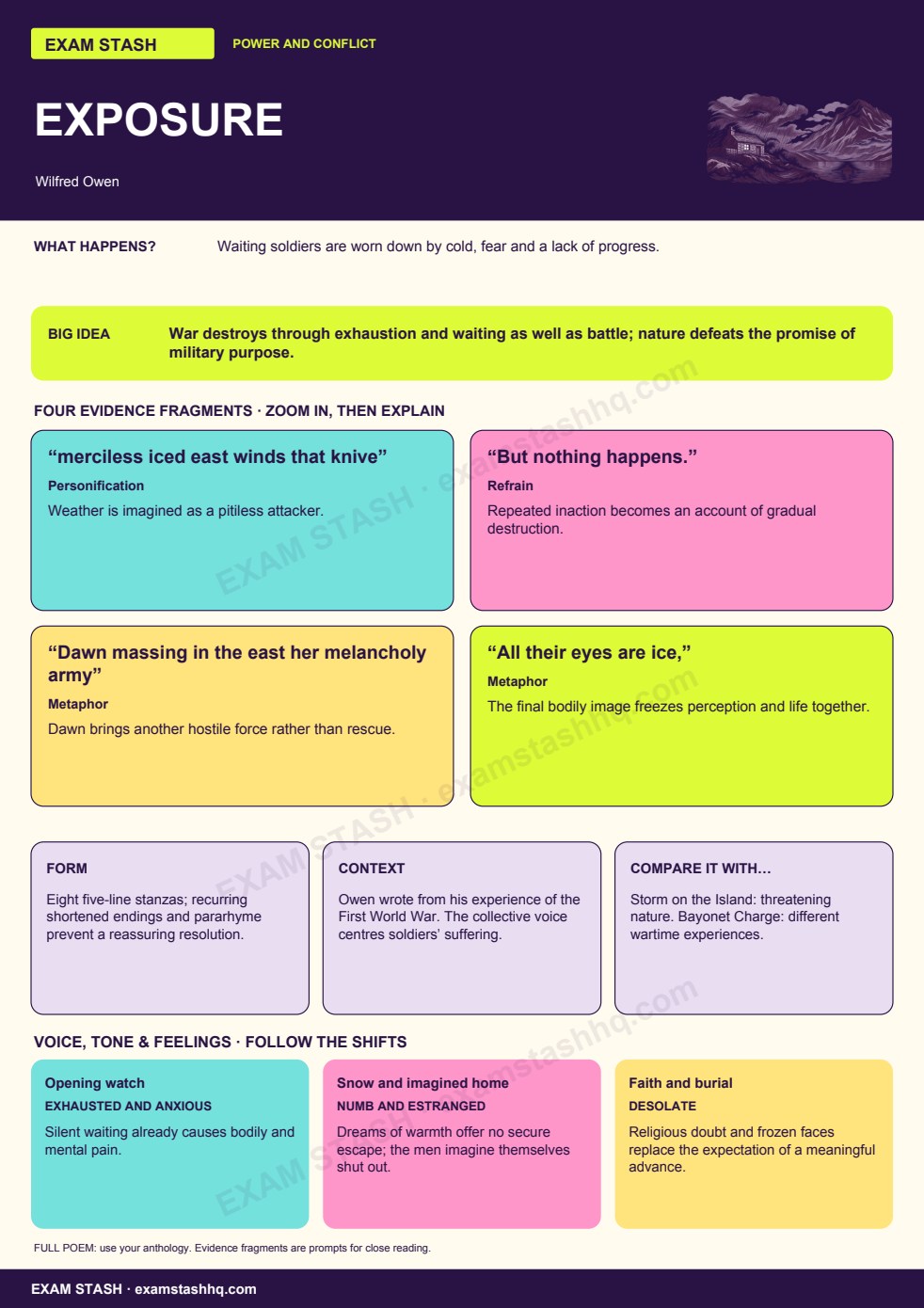
War destroys through exhaustion and waiting as well as battle; nature defeats the promise of military purpose.
Read the accessible text and study notes
What happens?
Waiting soldiers are worn down by cold, fear and a lack of progress.
Big idea
War destroys through exhaustion and waiting as well as battle; nature defeats the promise of military purpose.
“merciless iced east winds that knive”
Personification — Weather is imagined as a pitiless attacker.
“But nothing happens.”
Refrain — Repeated inaction becomes an account of gradual destruction.
“Dawn massing in the east her melancholy army”
Metaphor — Dawn brings another hostile force rather than rescue.
“All their eyes are ice,”
Metaphor — The final bodily image freezes perception and life together.
Form
Eight five-line stanzas; recurring shortened endings and pararhyme prevent a reassuring resolution.
Context
Owen wrote from his experience of the First World War. The collective voice centres soldiers’ suffering.
Compare
Storm on the Island: threatening nature. Bayonet Charge: different wartime experiences.
Voice, tone and feelings
Opening watch · Exhausted and anxious — Silent waiting already causes bodily and mental pain.
Snow and imagined home · Numb and estranged — Dreams of warmth offer no secure escape; the men imagine themselves shut out.
Faith and burial · Desolate — Religious doubt and frozen faces replace the expectation of a meaningful advance.
Recall
Why is inaction so destructive here?
Read the full poem in your own AQA anthology. Anthology information and source.