BLOOD BROTHERS
Mickey Johnstone
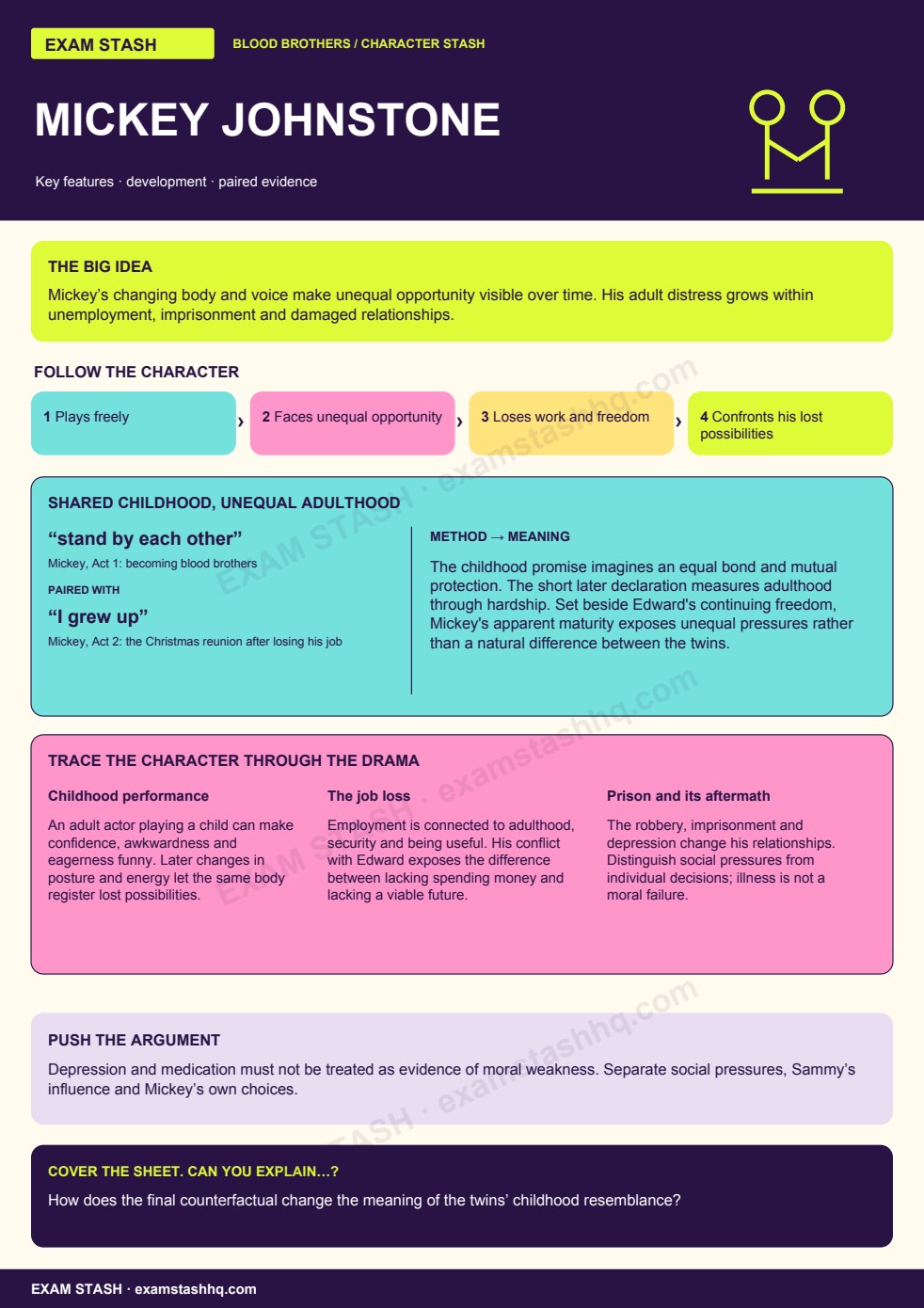
Mickey’s changing body and voice make unequal opportunity visible over time. His adult distress grows within unemployment, imprisonment and damaged relationships.
Read the accessible text and study notes
Mickey Johnstone
Mickey’s changing body and voice make unequal opportunity visible over time. His adult distress grows within unemployment, imprisonment and damaged relationships.
Plays freely → Faces unequal opportunity → Loses work and freedom → Confronts his lost possibilities
Shared childhood, unequal adulthood
“stand by each other” — Mickey, Act 1: becoming blood brothers
paired with “I grew up” — Mickey, Act 2: the Christmas reunion after losing his job
The childhood promise imagines an equal bond and mutual protection. The short later declaration measures adulthood through hardship. Set beside Edward's continuing freedom, Mickey's apparent maturity exposes unequal pressures rather than a natural difference between the twins.
Push the argument
Depression and medication must not be treated as evidence of moral weakness. Separate social pressures, Sammy’s influence and Mickey’s own choices.
Recall
How does the final counterfactual change the meaning of the twins’ childhood resemblance?
Trace the drama
Childhood performance
An adult actor playing a child can make confidence, awkwardness and eagerness funny. Later changes in posture and energy let the same body register lost possibilities.
The job loss
Employment is connected to adulthood, security and being useful. His conflict with Edward exposes the difference between lacking spending money and lacking a viable future.
Prison and its aftermath
The robbery, imprisonment and depression change his relationships. Distinguish social pressures from individual decisions; illness is not a moral failure.
Evidence sources
Willy Russell: Blood Brothers. Scene locations are used because page numbers vary by edition.