AN INSPECTOR CALLS
Eric Birling
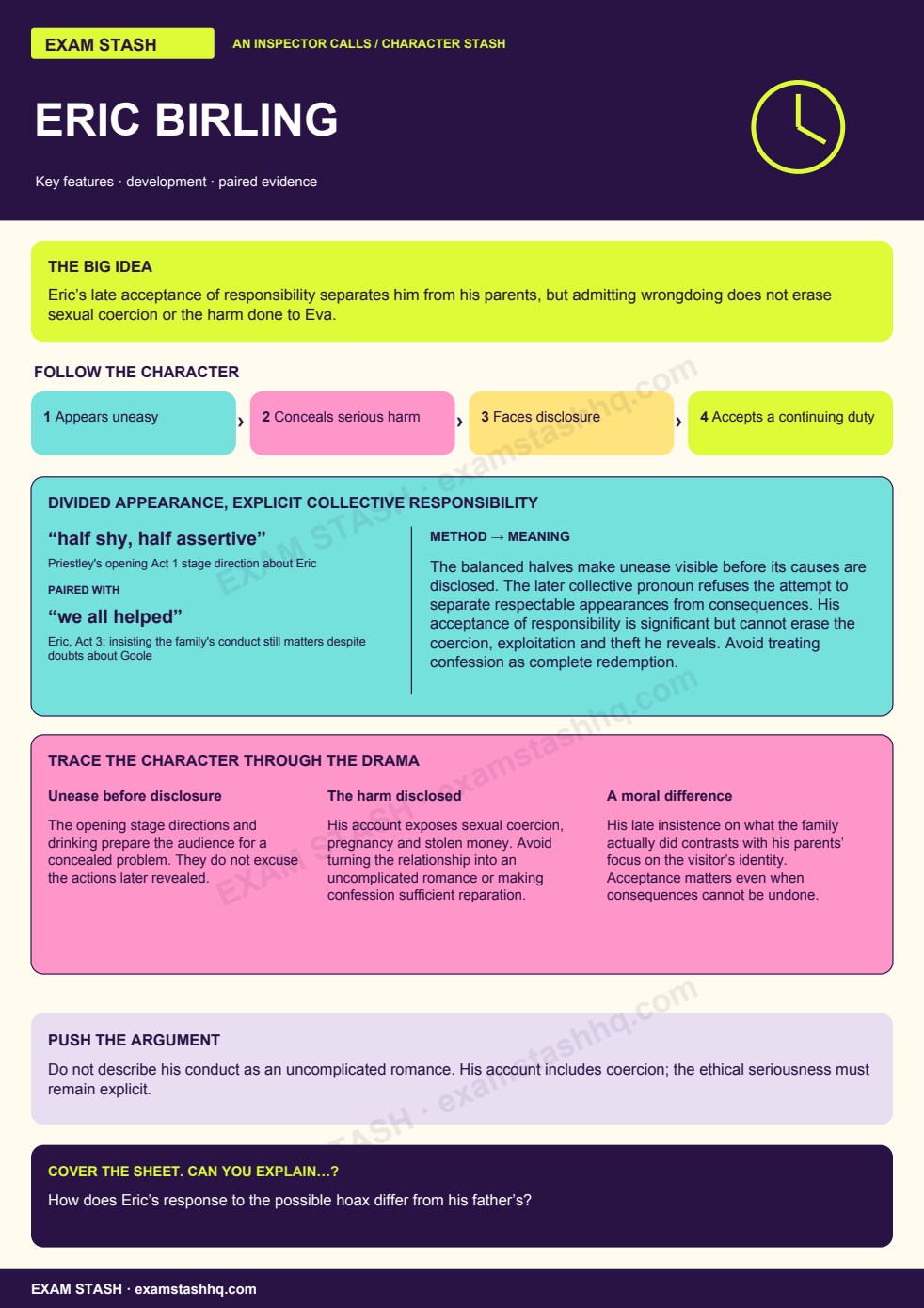
Eric’s late acceptance of responsibility separates him from his parents, but admitting wrongdoing does not erase sexual coercion or the harm done to Eva.
Read the accessible text and study notes
Eric Birling
Eric’s late acceptance of responsibility separates him from his parents, but admitting wrongdoing does not erase sexual coercion or the harm done to Eva.
Appears uneasy → Conceals serious harm → Faces disclosure → Accepts a continuing duty
Divided appearance, explicit collective responsibility
“half shy, half assertive” — Priestley's opening Act 1 stage direction about Eric
paired with “we all helped” — Eric, Act 3: insisting the family's conduct still matters despite doubts about Goole
The balanced halves make unease visible before its causes are disclosed. The later collective pronoun refuses the attempt to separate respectable appearances from consequences. His acceptance of responsibility is significant but cannot erase the coercion, exploitation and theft he reveals. Avoid treating confession as complete redemption.
Push the argument
Do not describe his conduct as an uncomplicated romance. His account includes coercion; the ethical seriousness must remain explicit.
Recall
How does Eric’s response to the possible hoax differ from his father’s?
Trace the drama
Unease before disclosure
The opening stage directions and drinking prepare the audience for a concealed problem. They do not excuse the actions later revealed.
The harm disclosed
His account exposes sexual coercion, pregnancy and stolen money. Avoid turning the relationship into an uncomplicated romance or making confession sufficient reparation.
A moral difference
His late insistence on what the family actually did contrasts with his parents’ focus on the visitor’s identity. Acceptance matters even when consequences cannot be undone.
Evidence sources
- School quotation-recall sheet reproducing opening character stage directions. Its typography is simplified; quoted fragments selected avoid uncertain punctuation.
- Secondary complete script transcription; useful for exact Act/context checks but contains typographical errors. Wording cross-checked with school/board sources where available.
Explore the play. Scene locations are used because page numbers vary by edition.