AN INSPECTOR CALLS
Arthur Birling
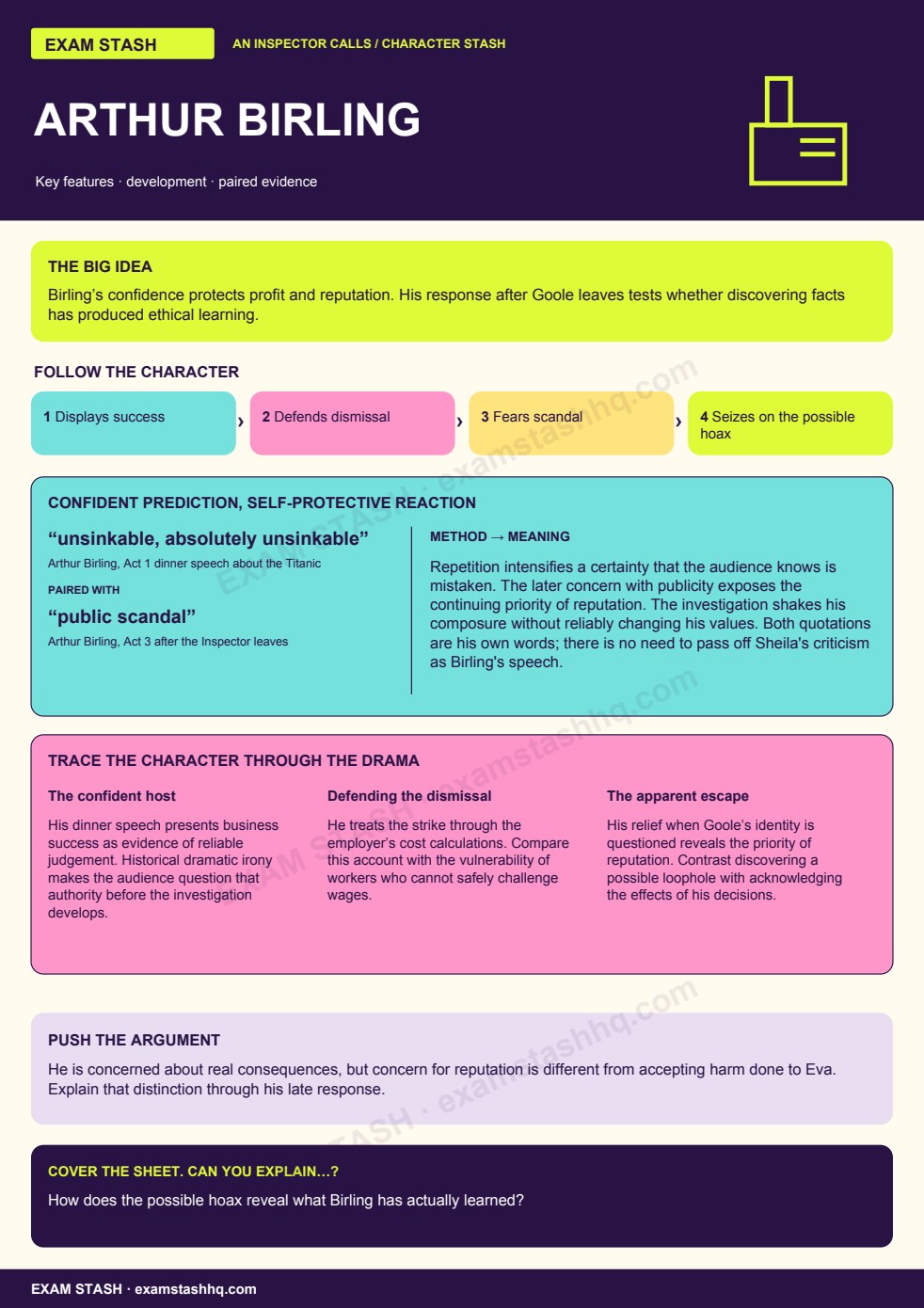
Birling’s confidence protects profit and reputation. His response after Goole leaves tests whether discovering facts has produced ethical learning.
Read the accessible text and study notes
Arthur Birling
Birling’s confidence protects profit and reputation. His response after Goole leaves tests whether discovering facts has produced ethical learning.
Displays success → Defends dismissal → Fears scandal → Seizes on the possible hoax
Confident prediction, self-protective reaction
“unsinkable, absolutely unsinkable” — Arthur Birling, Act 1 dinner speech about the Titanic
paired with “public scandal” — Arthur Birling, Act 3 after the Inspector leaves
Repetition intensifies a certainty that the audience knows is mistaken. The later concern with publicity exposes the continuing priority of reputation. The investigation shakes his composure without reliably changing his values. Both quotations are his own words; there is no need to pass off Sheila's criticism as Birling's speech.
Push the argument
He is concerned about real consequences, but concern for reputation is different from accepting harm done to Eva. Explain that distinction through his late response.
Recall
How does the possible hoax reveal what Birling has actually learned?
Trace the drama
The confident host
His dinner speech presents business success as evidence of reliable judgement. Historical dramatic irony makes the audience question that authority before the investigation develops.
Defending the dismissal
He treats the strike through the employer’s cost calculations. Compare this account with the vulnerability of workers who cannot safely challenge wages.
The apparent escape
His relief when Goole’s identity is questioned reveals the priority of reputation. Contrast discovering a possible loophole with acknowledging the effects of his decisions.
Evidence sources
Explore the play. Scene locations are used because page numbers vary by edition.